What Are the Phases of the Menstrual Cycle?
Reading time:
7
min
The 4 Phases of Your Menstrual Cycle, Simply Explained

The four phases of the menstrual cycle are: menstruation (days 1–5), the follicular phase (days 1–13), ovulation (around day 14), and the luteal phase (days 15–28). Each phase is driven by a distinct hormonal shift that affects energy, mood, skin, fertility, and digestion throughout the month.
Confused about what happens during your cycle? Here is a plain-language guide to all four phases — what is happening hormonally, what you might feel, and when to speak with a doctor.
Key Things to Know About Your Menstrual Cycle
Your cycle starts on the first day of your period and ends the day before your next period begins
A typical cycle lasts between 21 and 35 days; 28 days is a common average
Ovulation occurs when an ovary releases a mature egg — this is your most fertile moment
PMS symptoms in the second half of the cycle are driven by the drop in oestrogen and rise in progesterone
The Eshe Cycle Calendar helps you track symptoms, predict your fertile window, and spot patterns that may indicate a hormonal condition
How Long Is a Normal Menstrual Cycle?
Most cycles fall between 21 and 35 days, with 28 days being a common average. Your period typically lasts two to seven days. Both can shift at different life stages — puberty, after pregnancy, during perimenopause, or when starting or stopping hormonal contraception.
Phase 1: Menstruation (Days 1–5)
What Is Happening
Day one of your period is day one of your cycle. The uterine lining — built up during the previous cycle in preparation for a potential pregnancy — sheds along with blood. Uterine contractions help expel this tissue. Oestrogen and progesterone are at their lowest point, signalling the body to begin a new cycle.
What You Might Feel
Cramping in the lower abdomen or back
Bloating and breast tenderness
Fatigue, headaches, and digestive changes
Mood swings or low motivation
Bleeding colour can range from bright red to dark brown, and some clotting is normal. Clots larger than a 50 kobo coin or a 5-shilling coin, soaking through a pad every hour, or pain that prevents normal activity are all worth discussing with a doctor.
Phase 2: The Follicular Phase (Days 1–13)
What Is Happening
The follicular phase overlaps with menstruation and continues until ovulation. The pituitary gland releases follicle-stimulating hormone (FSH), prompting several follicles in the ovaries to begin developing. One becomes dominant and matures an egg. As follicles grow, they produce oestrogen, which thickens the uterine lining and prepares the body for a potential pregnancy.
What You Might Feel
As oestrogen rises, most women notice a gradual shift toward higher energy, better mood, sharper focus, and stronger motivation. Cervical mucus becomes increasingly fluid as ovulation approaches.
Phase 3: Ovulation (Around Day 14)
What Is Ovulation and When Does It Happen?
Ovulation is the release of a mature egg from the dominant follicle, triggered by a sharp surge in luteinising hormone (LH). The egg is viable for approximately 12 to 24 hours. Because sperm can survive in the reproductive tract for up to five days, the fertile window extends to roughly six days — the five days before ovulation plus ovulation day itself.
Hormones During Ovulation
LH spikes sharply. Oestrogen peaks just before the LH surge. Progesterone begins to rise immediately after ovulation.
What You Might Feel
Clear, stretchy cervical mucus
Mild one-sided pelvic ache (Mittelschmerz)
A noticeable boost in energy and libido
Slight rise in basal body temperature
Occasional light spotting
This is typically the phase when women report feeling their best — most social, most energetic, and most confident.
Phase 4: The Luteal Phase (Days 15–28)
What Is the Luteal Phase?
After the egg is released, the follicle transforms into a structure called the corpus luteum, which produces progesterone. Progesterone maintains the thickened uterine lining in case a fertilised egg implants.
If fertilisation occurs: the embryo implants in the lining. The corpus luteum continues producing progesterone to support early pregnancy.
If fertilisation does not occur: the corpus luteum breaks down, progesterone and oestrogen fall, and the uterine lining begins to shed — starting a new cycle.
What You Might Feel
The drop in oestrogen and rise in progesterone during this phase drives most PMS symptoms:
Breast tenderness and bloating
Fatigue and sleep changes
Mood swings, irritability, or low mood
Food cravings, particularly for carbohydrates
Skin breakouts
Headaches
These symptoms typically peak in the final week before your period and ease once bleeding begins.
When Can You Get Pregnant During Your Cycle?
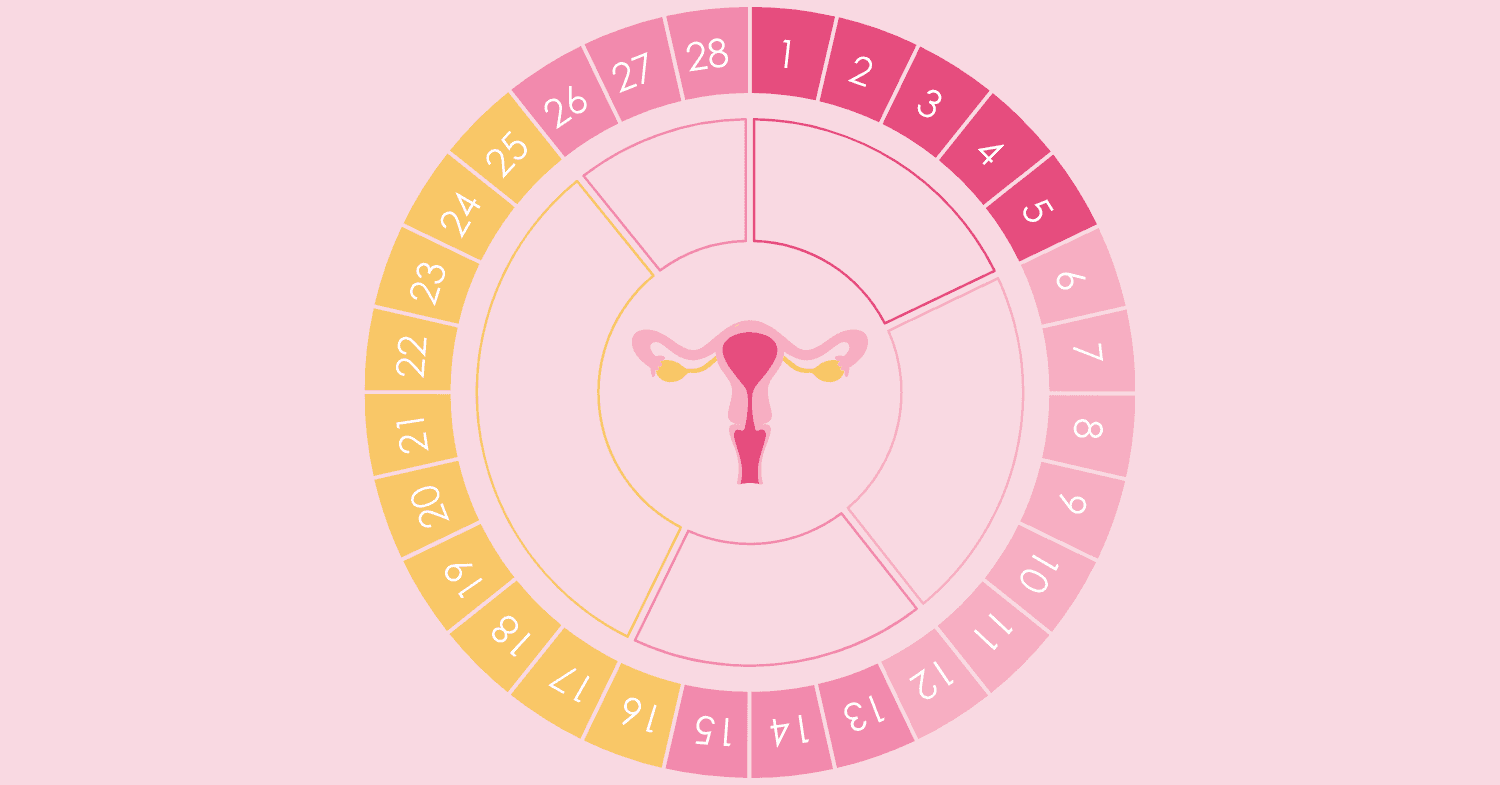
Phase | Fertility |
|---|---|
Menstruation | Very low, but not zero |
Early follicular | Low |
Late follicular, approaching ovulation | Rising |
Ovulation day ± 2 days | Peak |
Luteal phase | Declining, then negligible |
When to See a Doctor
Contact a healthcare provider if you experience:
Cycles consistently shorter than 21 days or longer than 35 days
No period for three or more consecutive months (outside pregnancy)
Ovulation pain lasting longer than 24 hours
Bleeding that is unusually heavy, unusually light, or occurring between periods
Spotting after sex
Why Does Tracking Your Cycle Matter?
Tracking your cycle gives you a record your doctor can actually use. It also helps you:
Plan for pregnancy: identify your fertile window with greater accuracy
Manage symptoms: understand why you feel a certain way at a certain point in the month
Detect issues early: irregular patterns are often the first sign of hormonal conditions like PCOS or thyroid dysfunction
The Eshe Cycle Calendar logs your cycle dates, symptoms, and physical signs in one place — and builds a personalised picture of your hormonal health over time.

Your Health Journey
Understand your body better with Eshe.
More Posts
You Might Also Like

© 2026 FEM HEALTH LIFE LTD. All rights reserved.